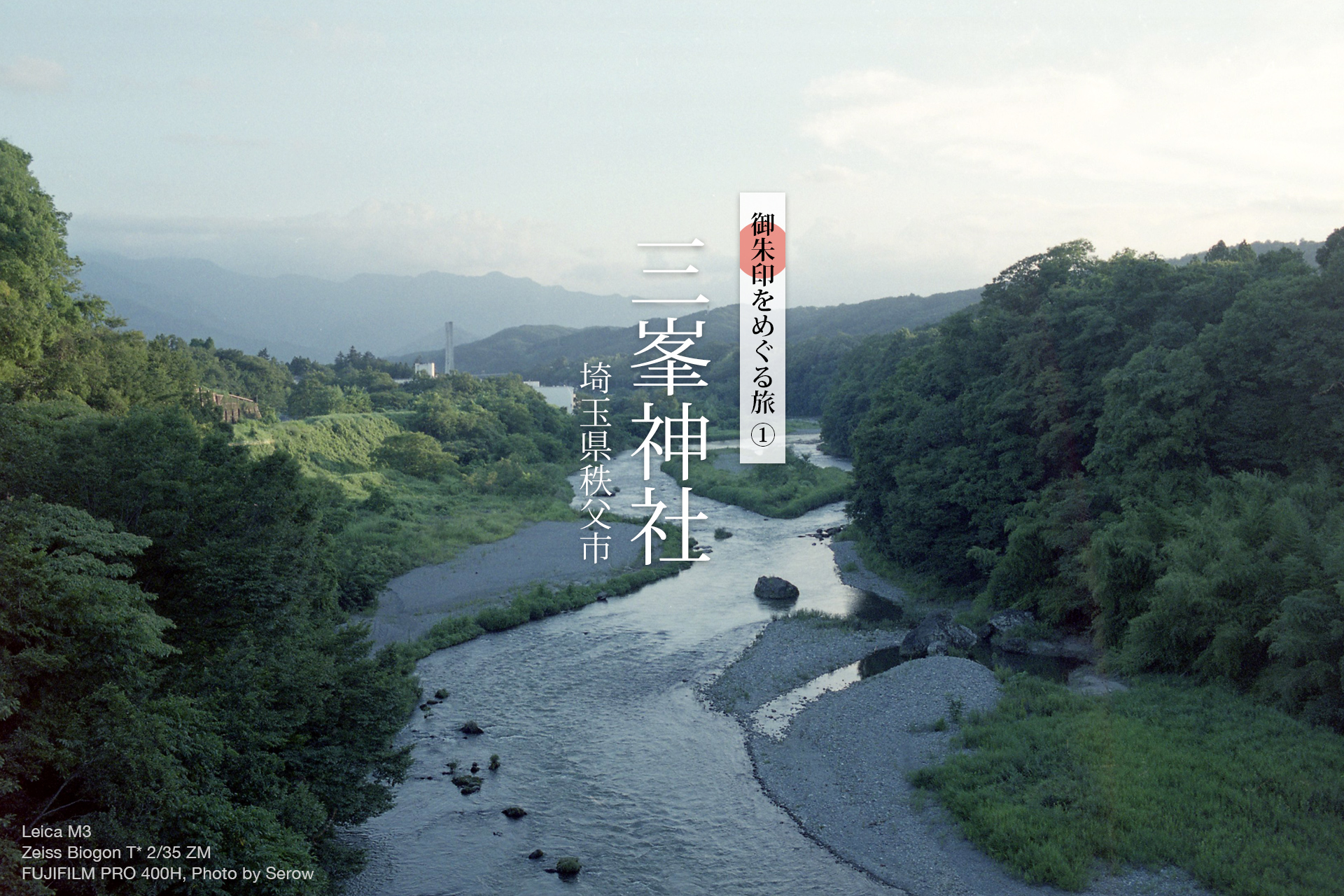
Insignia Stamp Collecting Trip Vol.1
Mitsumine Shrine, Chichibu, Saitama-Prefecture
When you visit Chichibu, you understand that mountain worship takes root in this area. We feel religious just by looking at the deep beautiful mountains and feel refreshed by pure forest air. This time, I headed to Mitsumine Shrine, one of the three Shinto shrines in Chichibu. It’s said to have been founded by the legendary Yamato Takeru and is a great example demonstrating religious devotion of the Japanese. After I put an extra roll of color negative film and a Goshuincho (insignia stamp book) in the bag, I went on a pilgrimage, tinkling a bell.(Photography & Text:Serow)
・Prologue
If you take photos for enjoyment, it’s best to shoot on the sidelines of the main event. If the goal is photography, you cannot enjoy your time at the destination because your mind is influenced by weather or obstacles for composition. Then, if you start to wonder what you shoot for looking into the viewfinder, you must be in terminal condition. This summer, I started my pilgrimage to Shinto shrines and Buddhist temples in order to purify my arrogant and clouded mind. I truly enjoy it and would like to show it to recreational photographers like you.
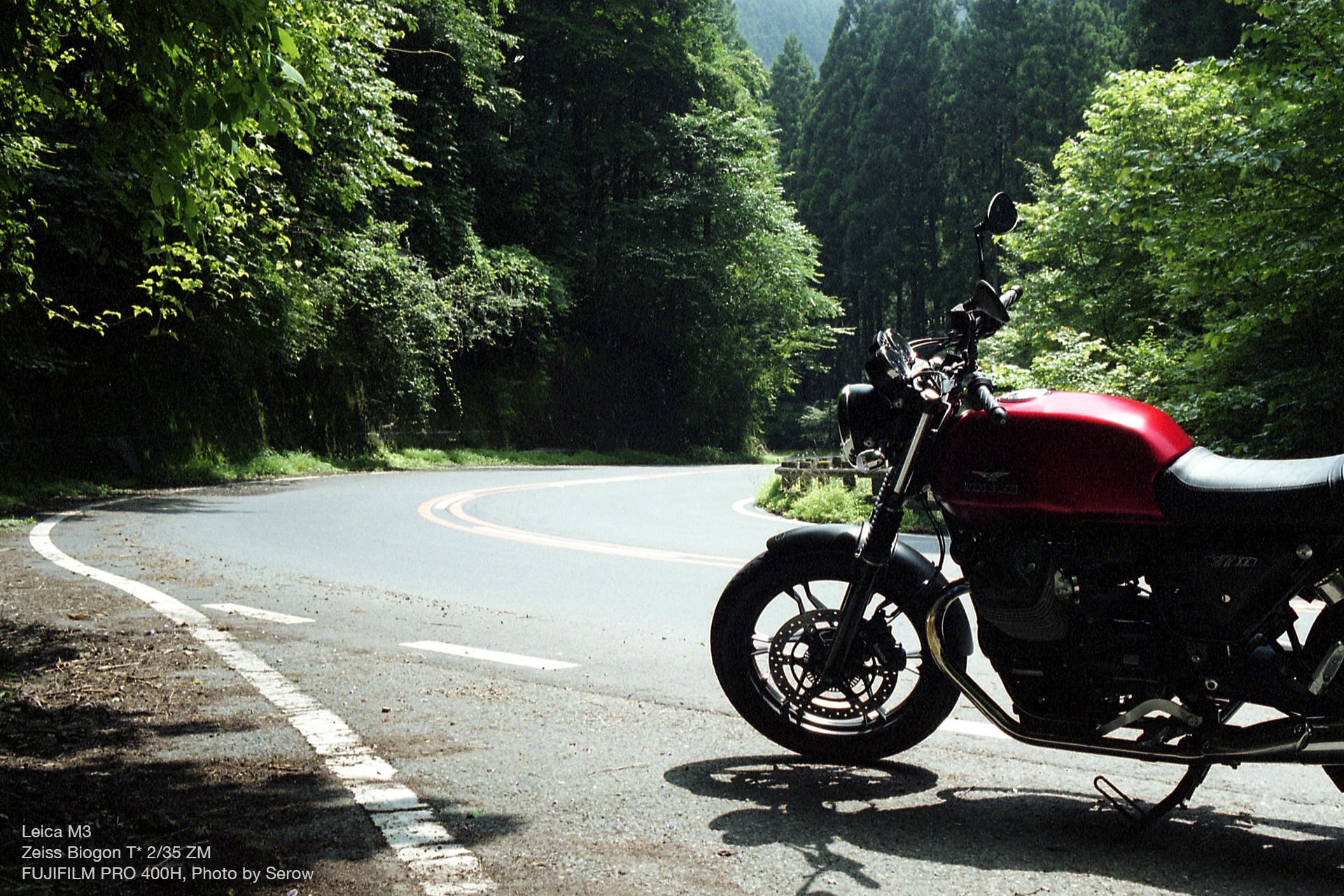
Mitsumine Shrine is located deep inside the Chichibu mountains, and it takes aat least 2 hours from the nearest expressway exit. From Tokyo, you pass City of Chichibu and head west. From Yamanashi, you go through the Karisaka Tunnel and head east. This time, I passed Oume and went through the mountain pass to get to Chichibu. After crossing Lake Chichibu on the route 140, there’s only one way to Mitsumine Shrine. You can also take a bus from Seibu Chichibu Station, but I recommend you to take Chichibu Railway to the last stop, Mitsumine-guchi, to switch to a bus.
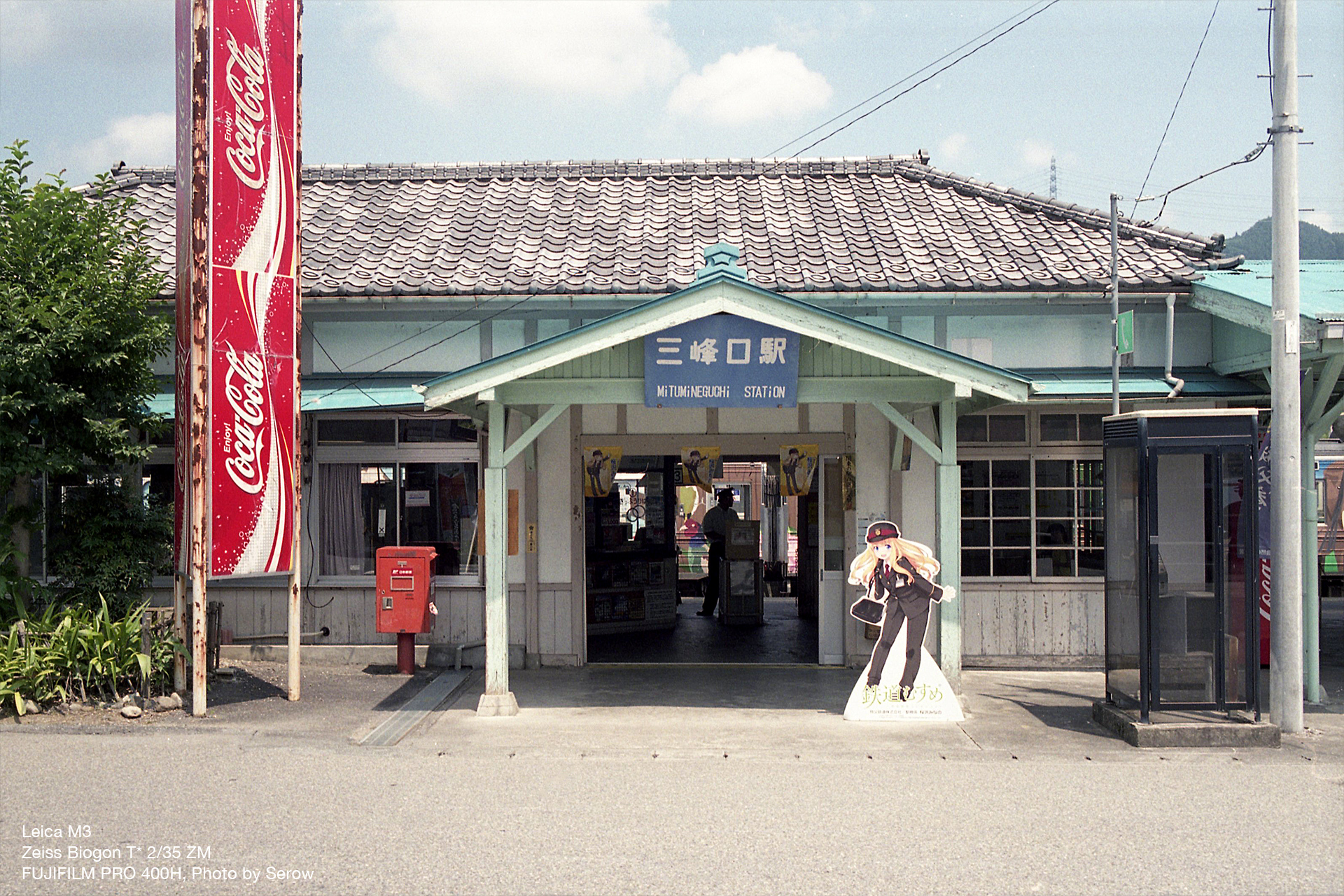
So, I stopped at the station. While looking at the scenery, you can also enjoy traveling by rail, eat a bento, or read. Because of the wooden station building and deep nature surrounding it, I felt like time stood still. If you reached here after making a travel plan carefully consulting a time table and switching trains for many times, you would be moved to tears. And in such a location, it’s best to "enjoy" waiting for a bus.
・Shooting the scene of the present time
As in the shot, there was a 2-dimention girl called "Tetsudo Musume" (railway girl) in front of the station building. For someone who wants to shoot a nostalgic scene, she should be an obstacle. But if you think it’s interesting, you can take a different stance for shooting. In a sence that only "we" can shoot the status quo, we should compose naturally and accept whatever in the frame as such photo may look interesting in the next decades.
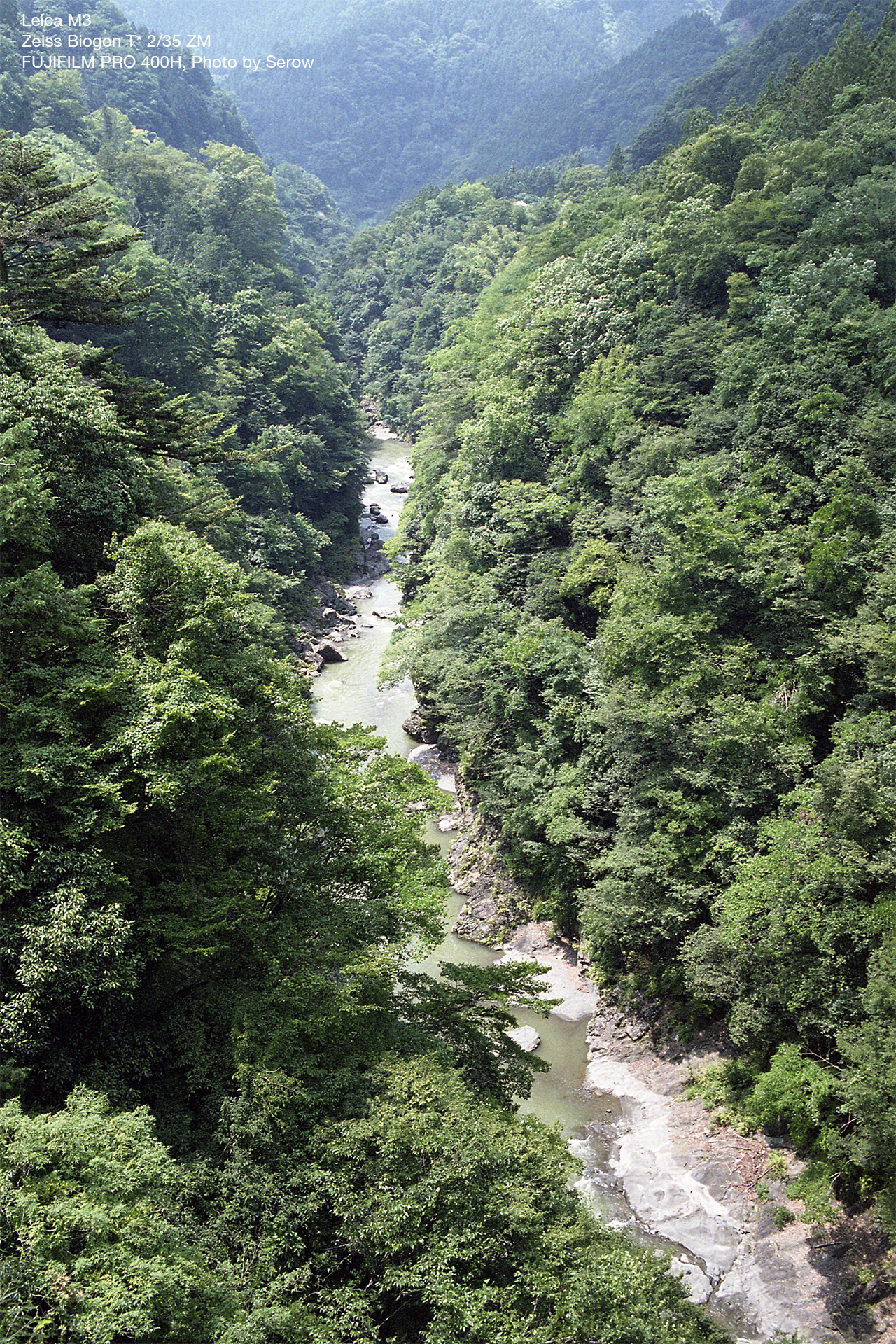
Arakawa River gathers water from Chichibu mountains and flows into Tokyo Bay after a long journey. In the past, people would have reached to Mitsumine Shrine by crossing high mountains in the behind. In this sacred mountain for Shugen-Do practitioners, you can imagine the world they looked. It’s not that something is on top of the mountain. The true value is the process to reach it.
Even though I know it, I ignite the engine… modern people are certainly spoiled…
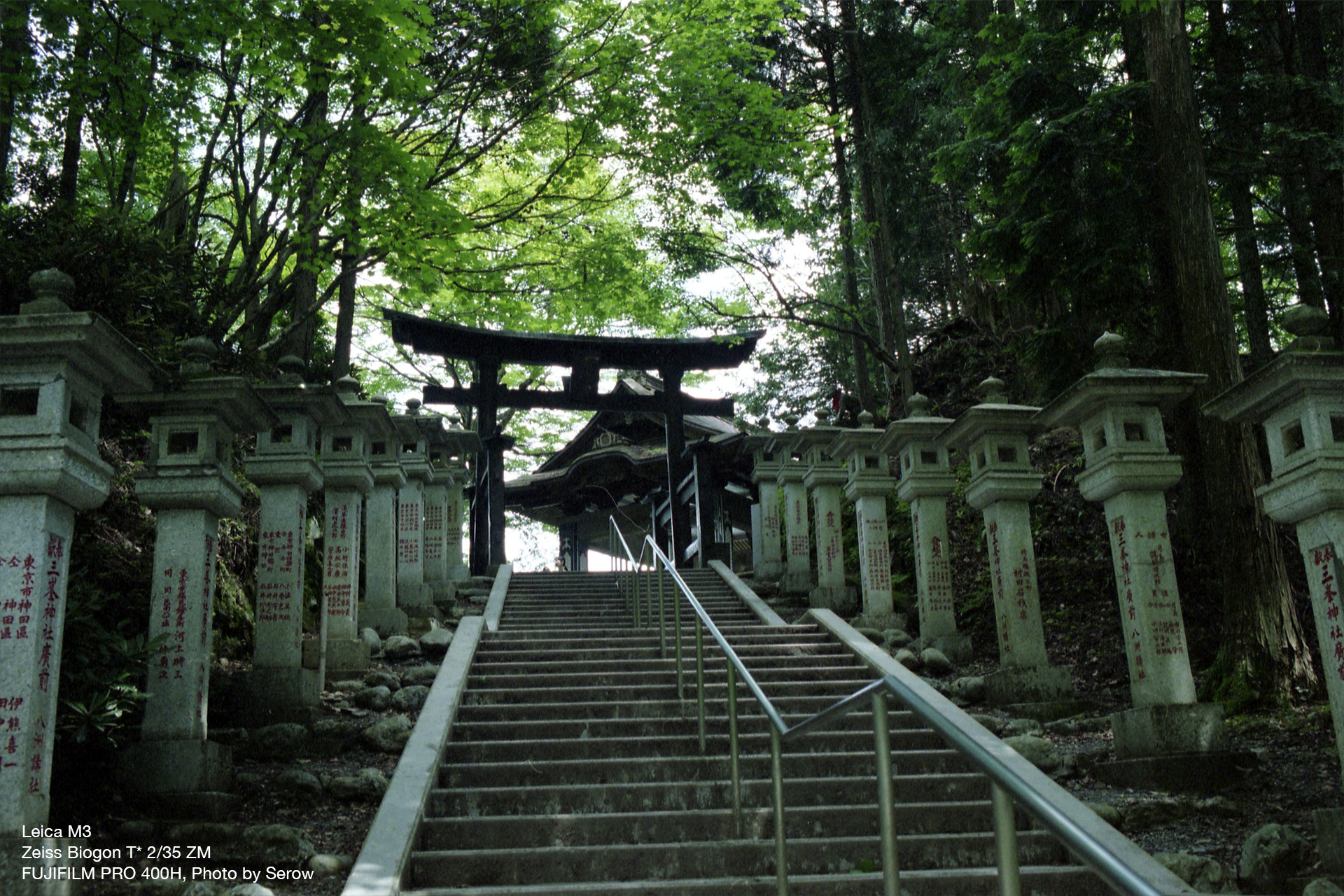
Mitsumine is a generic name of the three mountains including Mt. Kurotori (the highest), Mt. Shiraiwa, and Mt. Myoho. Soon after I entered the grounds of Mitsumine Shrine, I found the stone steps that lead to the hall where visitors worship the shrine on Mt. Myoho. This place is located 1,100 meters above sea level, and the air feels completely different. Is it because of the sacredness? Or, has the place become sacred because of the location?
・Why color negative film?
I chose it just because I hadn’t used it for a while and wanted to use it. Because of the gradual decrease of the number of choices for film, I wonder until when I can shoot film. Discussing the merits and demerits of digital and film is no longer necessary. It’s best to shoot film and enjoy the feeling of operating a mechanical camera while it’s available. In fact, I got my double-stroke Leica M3 because I fell in love with the feeling of film advancement.
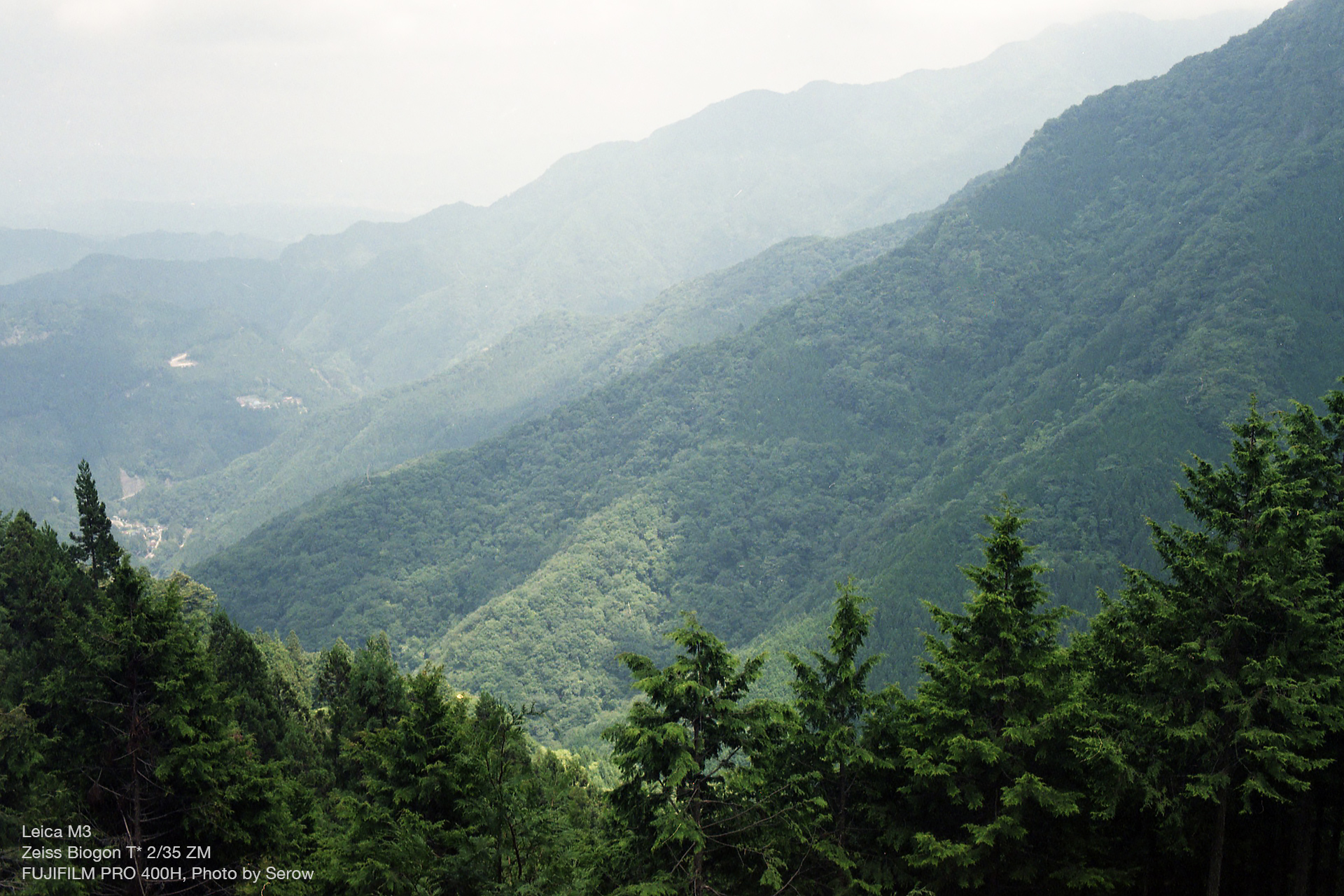
In the grounds, the worship hall is the only place to overlook the lower world. They say there’s a rear shrine on top of the Mt. Myoho, but unfortunately I didn’t wake up early enough to cover the extra route. I must be back here with mountaineering gear in the future.
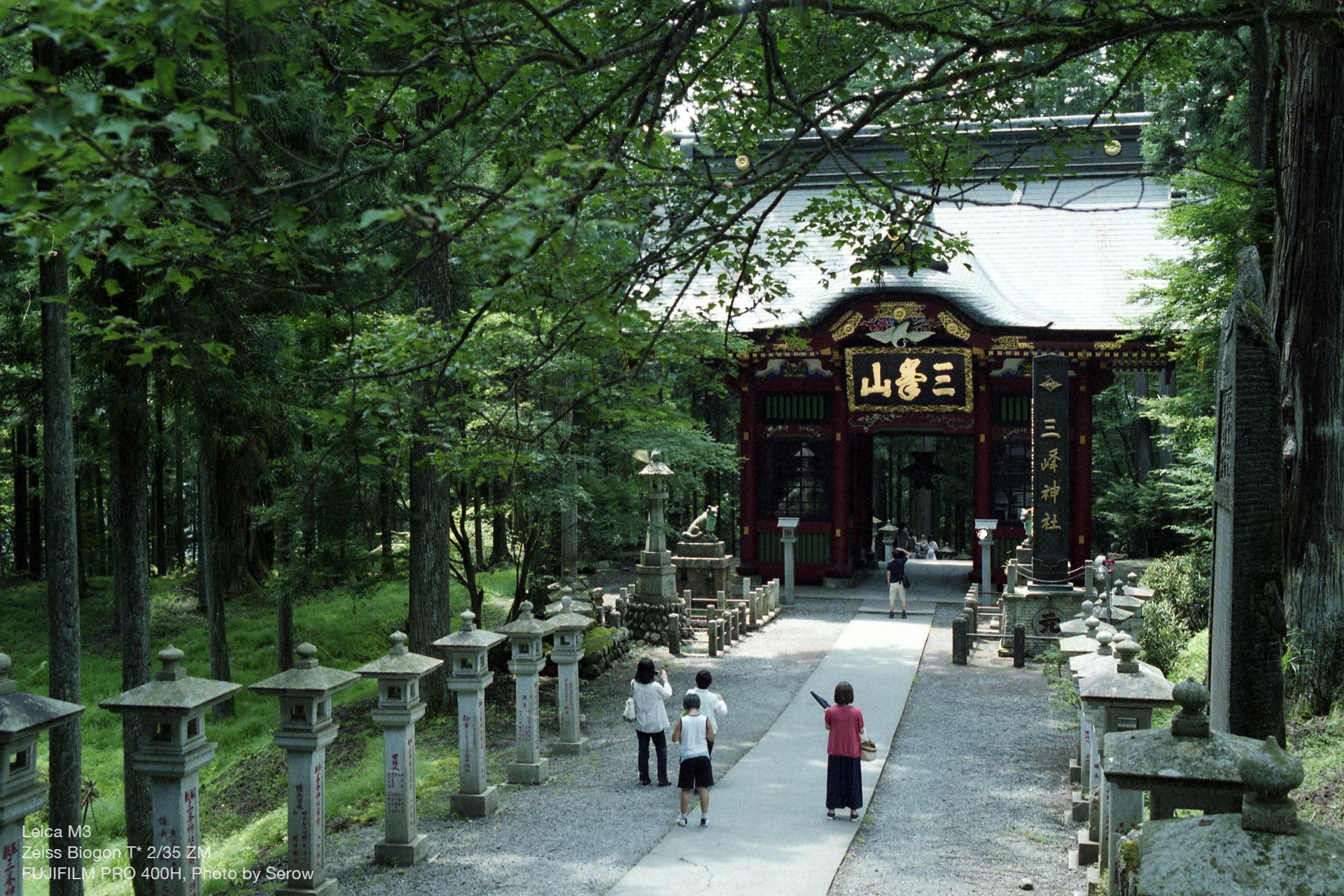
The Zuishin Gate was protected by the Nio guardians until the Ordinance Distinguishing Shinto and Buddhism was issued in Meiji period. The golden framed motto staggers visitors. No matter where they are located, spaces dedicated to the God represents aesthetics of the people. When something like this suddenly appears on the hill, people would naturally see it in awe. The wind from behind kept blowing through the Zuishin Gate. This is the perfect opening of my pilgrimage.
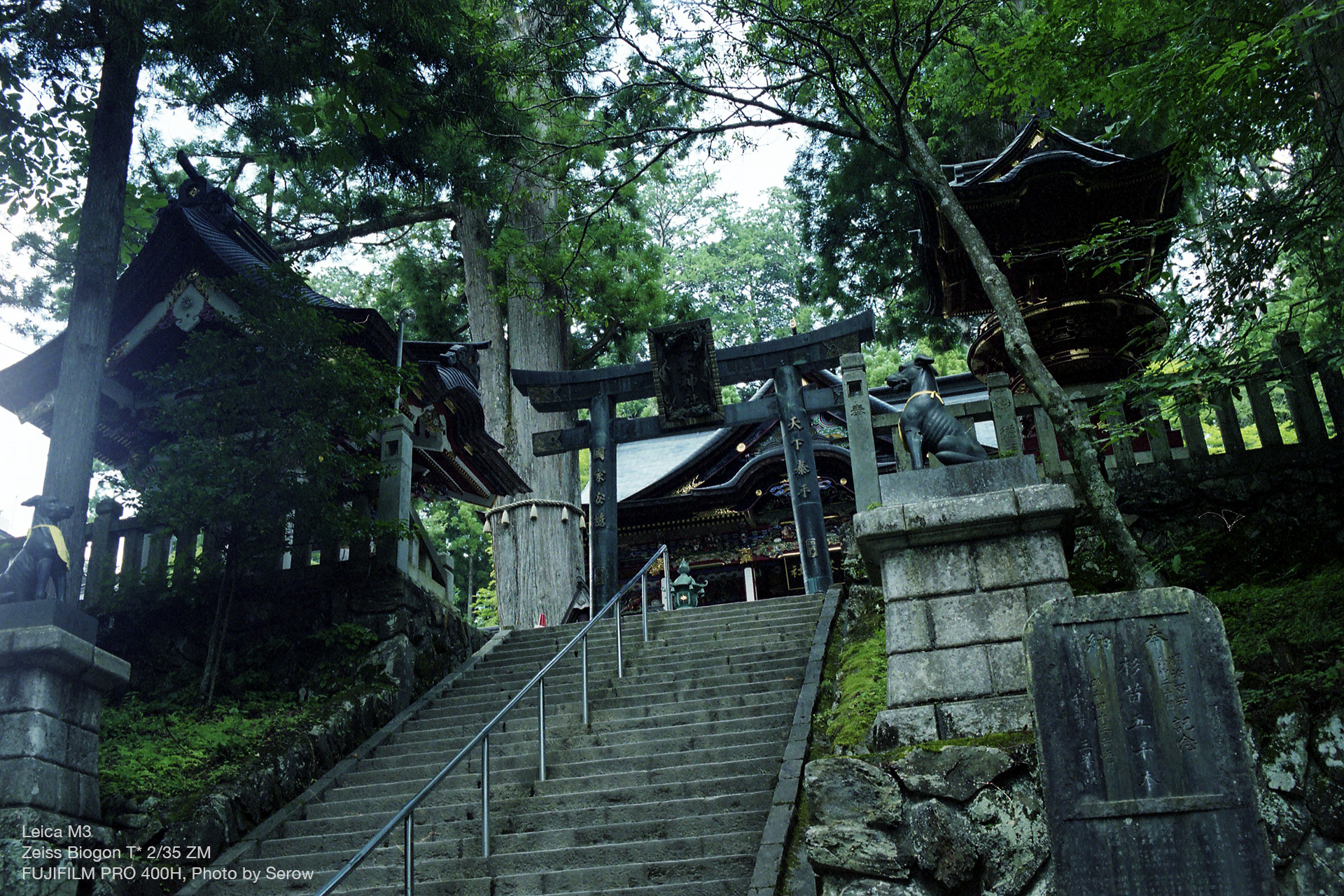
Enshrined gods are Izanagi and Izanami. This shrine was built by Yamato Takeru. Because En no Ozunu practiced here and Kukai enshrined Juuichimen Kannon with 11 heads, this shrine became an example of syncretization of Shinto with Buddhism. In addition, they uniquely worship wolves and their guardian dogs are wolves as well. They also have a statue of Masutatsu Oyama, the legendary master of Kyokushin Karate because he also had practiced here. So, this place has traces of beliefs in various periods in history. Anyway, it’s nice to study the history of a shrine or a temple before visiting them as it definitely enriches your pilgrimage.
・A trip starts with selecting gears.
If you wonder why I chose a 35mm lens for the LEICA M3, you’re a preacher who knows the LEICA M3 has bright frame lines just for 50mm, 90mm, and 135mm, skipping 35mm. Instead, it has higher viewfinder magnification ratio and the best lens to take its full advantage is a 50mm. Then why I chose a 35mm? It’s just a mistake. I thought I had mounted the Zeiss Planar T* 2/50 ZM instead of the 35mm, but the reality was the reverse… Yet, my composition seems to be fine presumably because of the "loose" composition with a bright frame line.
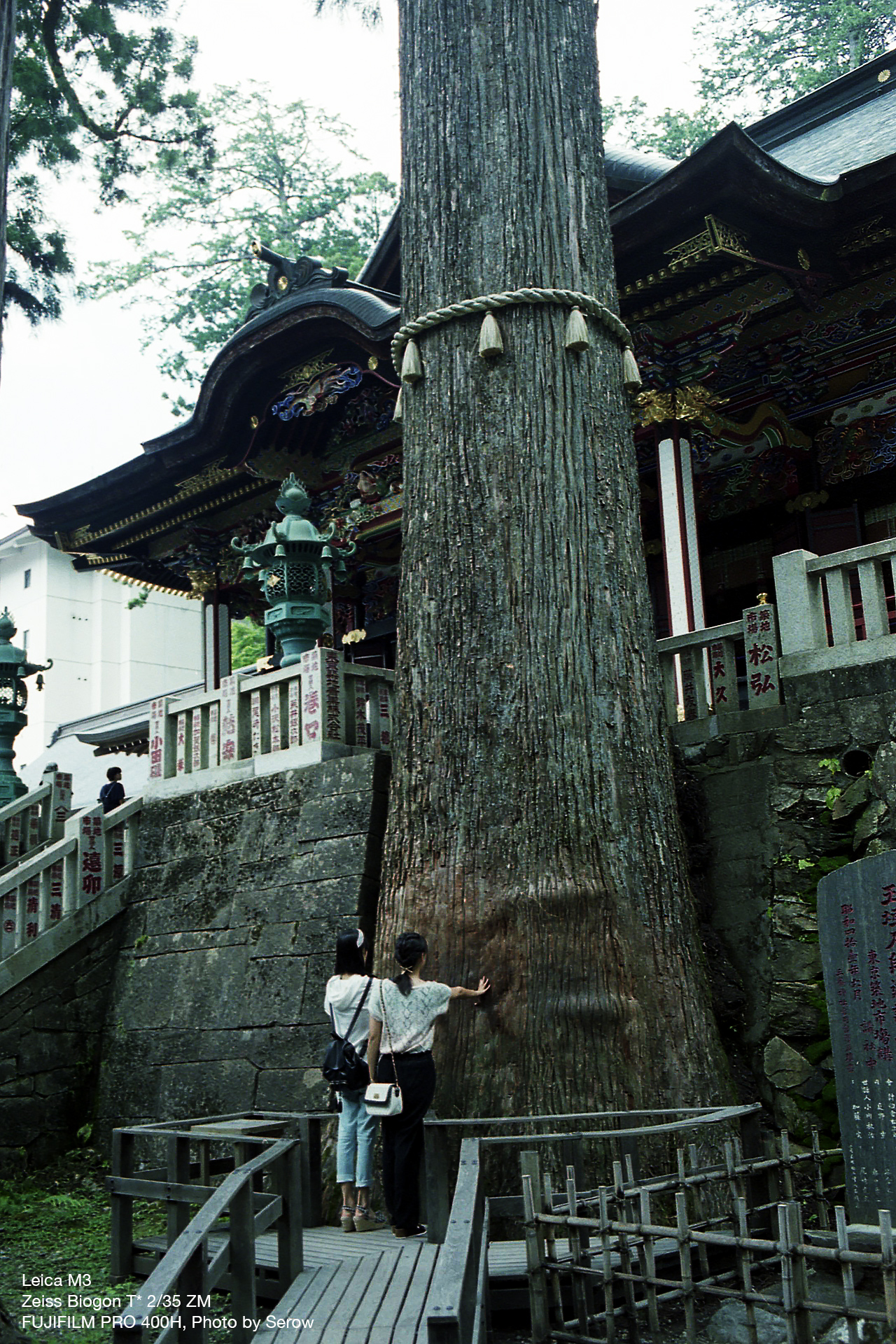
The second tree in front of the altar is a power spot. The smooth surface explains that it has received people’s wishes for a long time. If people have worshiped something for a long time, it must have a special meaning. I used to consider it as "just a superstition" when I was a child. Now, I don’t and this is why I started to pilgrim.
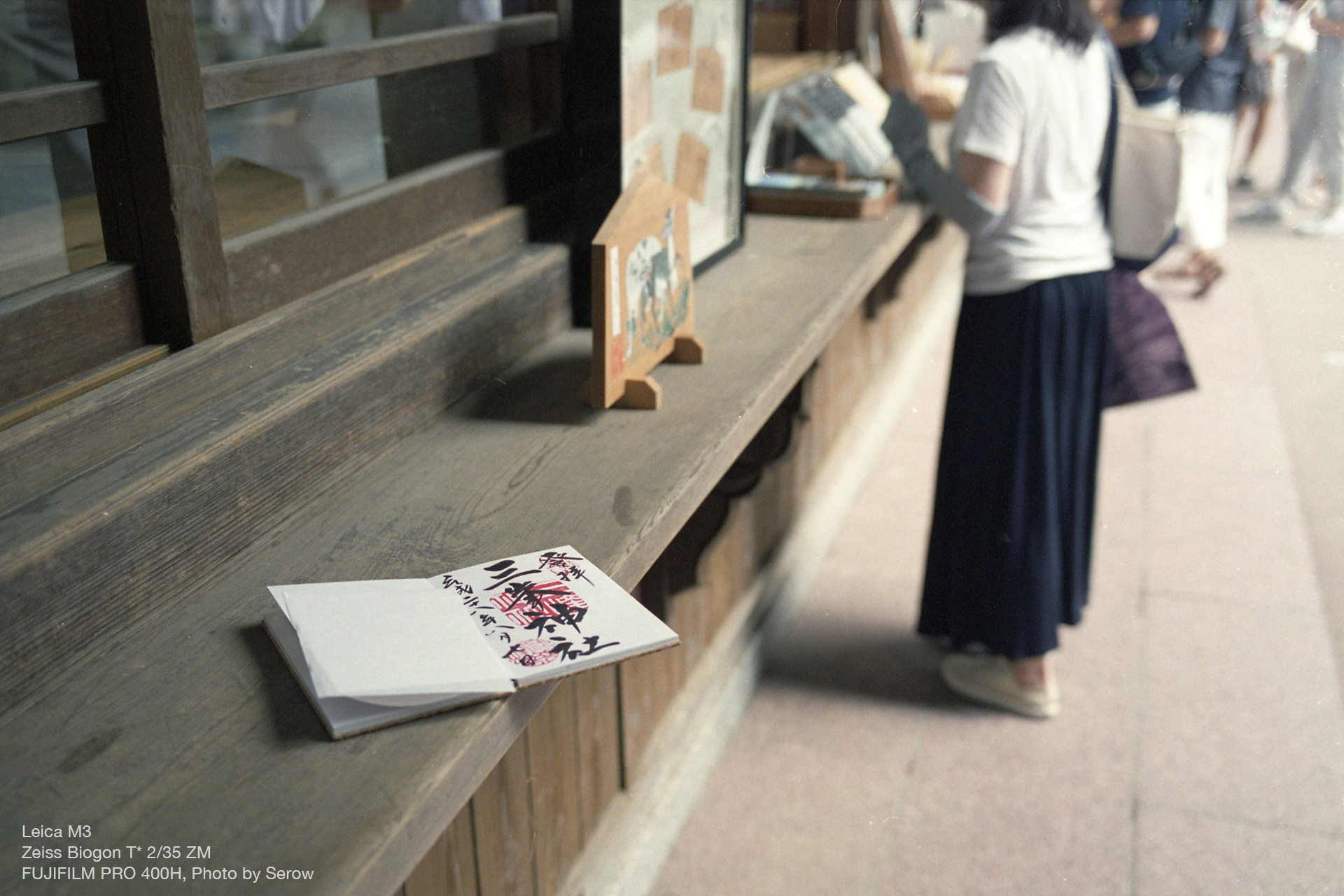
I finally got the stamp! Even though this is a "pilgrimage" instead of "stamp rally," I feel happy to collect them because every one of them is hand-written and contains my memories of the trip. And, I feel stronger "ownership" of my stamp book as I get more stamps. Now, where should I visit next?
・Getting started with insignia stamp collecting
You first need a stamp book, which is sold in many shinto shrines and buddhist temples. The easiest way is to get it at a place you get your first stamp. Of course, you need to do it during their office hours and the typical cost for a stamp is between 300 yen and 500 yen. In large shrines and temples, they have special counter for stamps.
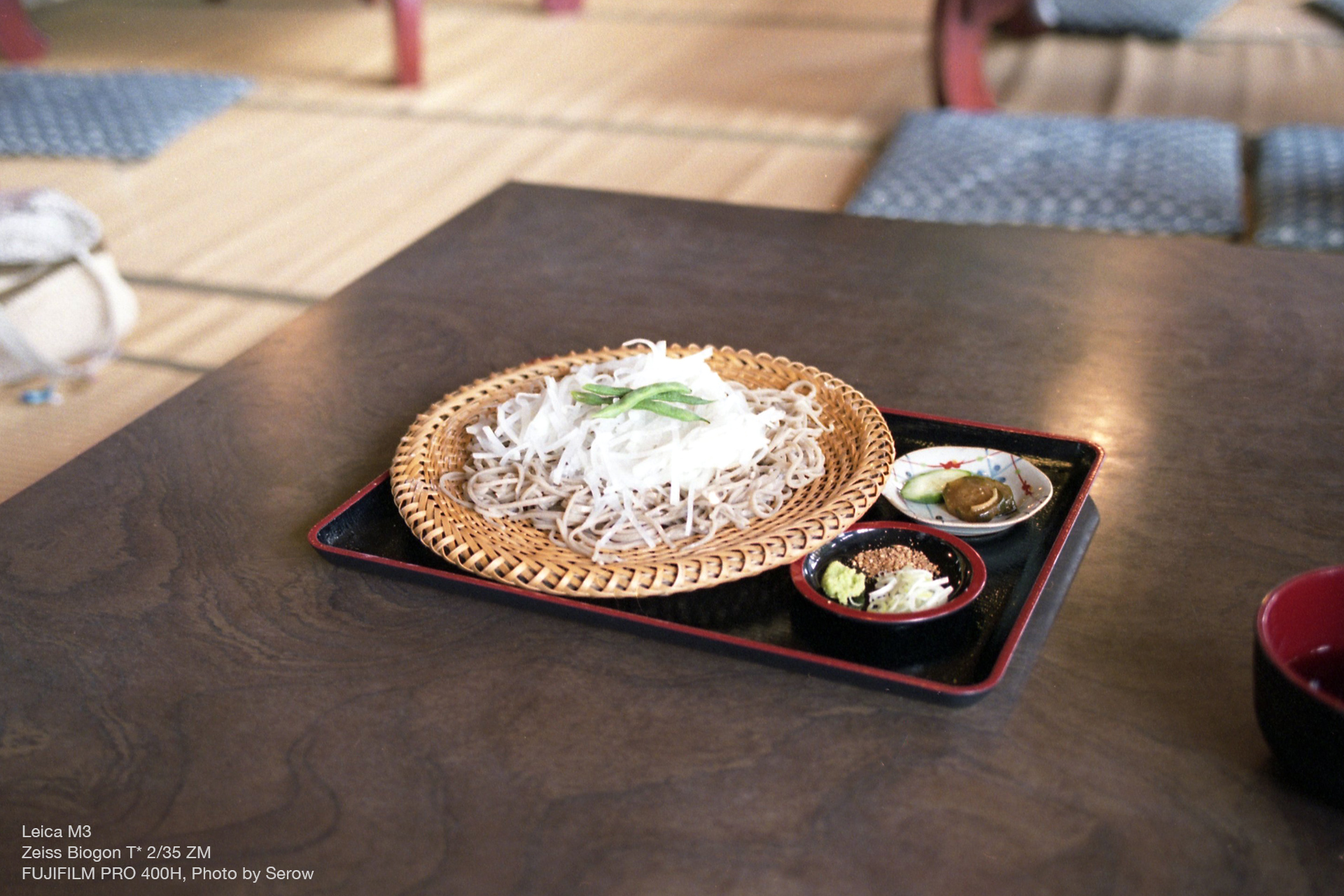
After worshipping, I had a soba noodle at a restaurant along the approach. Thanks to the cool wind on top of the mountain, I felt so refreshed even in mid summer. Before I started to pilgrim, the only purpose of my trip had been hot springs and food. Now, I can better feel the history and belief of the destination. Or, I feel more enculturated. Just by putting your hands together, you feel refreshed. Grab your stamp book and camera. You can start your pilgrimage by visiting local guardian gods.

Access to Mitsumine Shrine
* Takes roughly 3 to 4 hours from Tokyo.
By car
1) From Hanazono IC of Kanetsu Expressway: Take R140 and Minano Yorii By-Pass. (2hrs)
2) From Kofu-Showa IC of Chuo Expressway: Take R140 and Karisaka Tunnel. (2.5hrs)
By train, bus
From Ikebukuro Station: Take Red Allow Express Train of Seibu Railway (1hrs and 20mins) then 1) take an Express bus to Mitsumine Shrine (1hr and 30mins) or 2) switch to Chichibu Railway at Ohanabatake and head to Mitsumineguchi to ride a Seibu bus to Mitsumine Shrine.
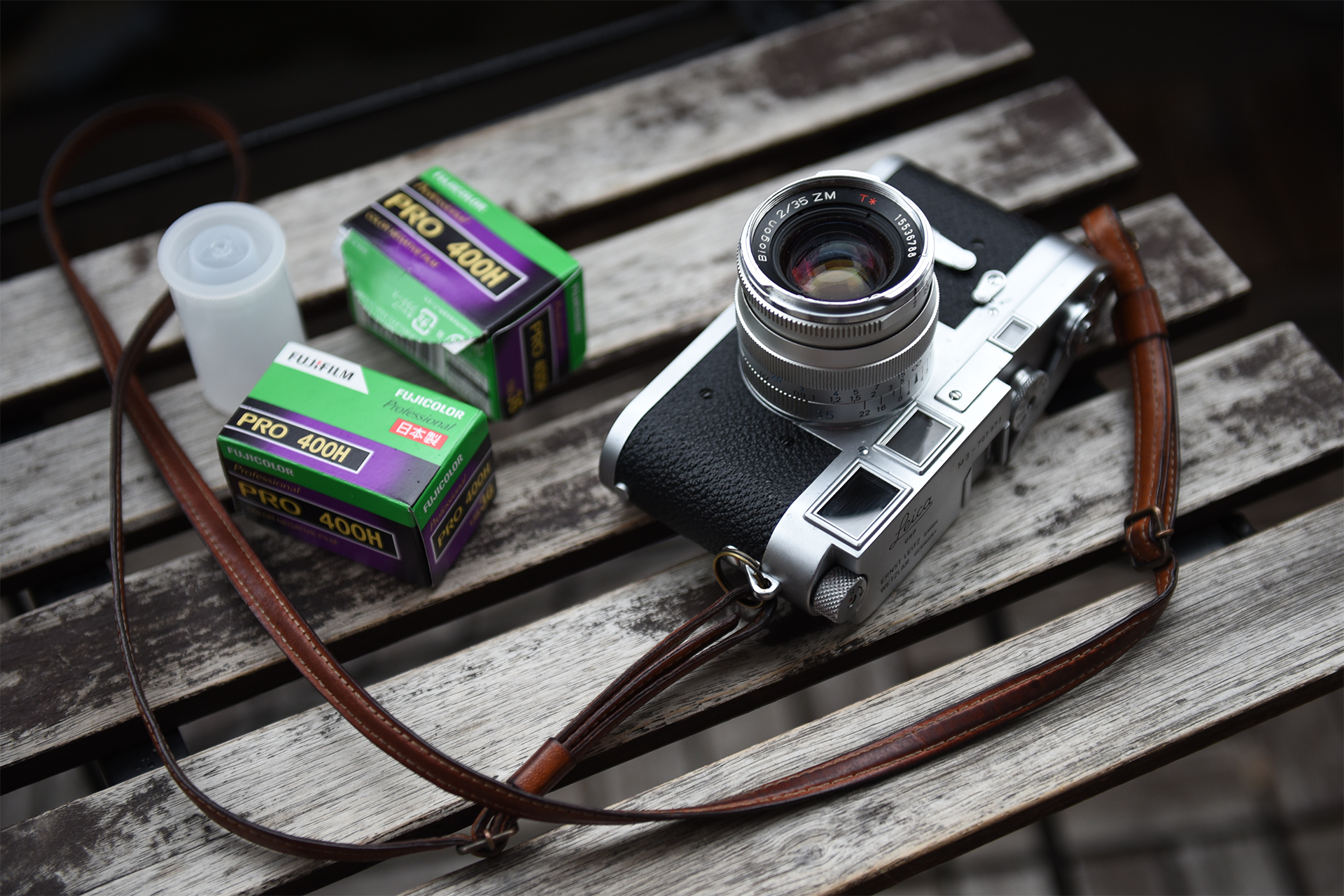
Equipment
Leica M3
Carl Zeiss Biogon T* 2/35 ZM
FUJIFILM PRO 400H
With film, you don’t have to worry about the number of pixels because image quality is determined only by the lens and film. The LEICA M3 is a masterpiece because it still operates and feels wonderfully even after 60 years since it was produced. Because used ones are available at a reasonable price, you can use your savings for overhaul and films.
( 2016.08.23 )